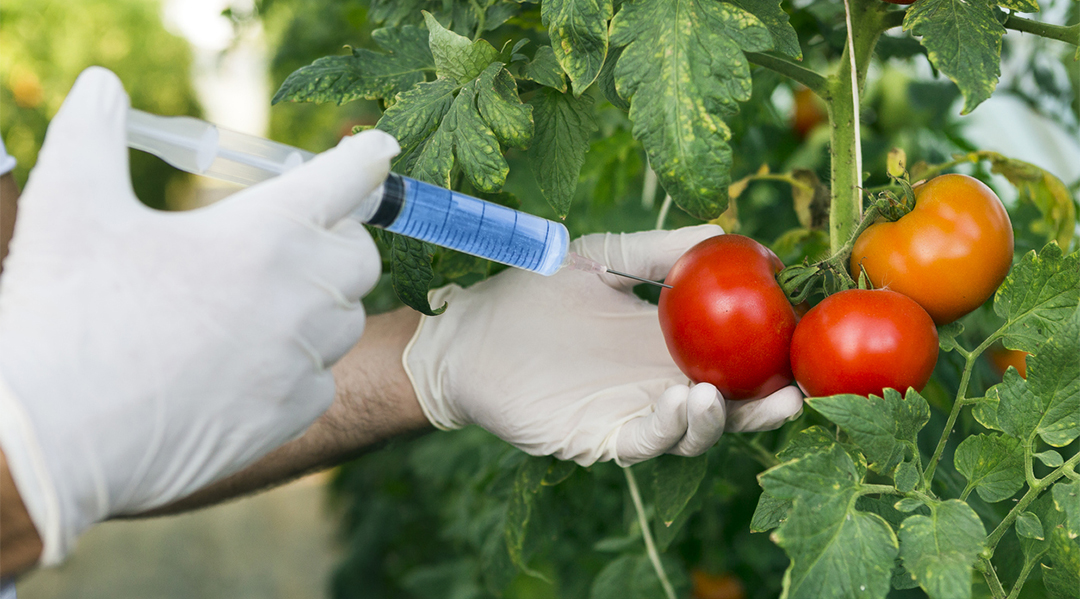
Injection into red tomato
The Effects of Genetically Modified Organisms (GMOs): Benefits, Risks, and the Future of Food
Image Idea: A field split into two sections — one side with natural crops and the other with genetically modified crops.
Introduction
Genetically Modified Organisms (GMOs) have become one of the most talked-about innovations in modern agriculture and food production. By altering the DNA of plants, animals, or microorganisms, scientists aim to improve food quality, increase yields, and solve agricultural challenges like pests and diseases.
However, while GMOs bring many potential benefits, they also raise health, environmental, and ethical concerns. This article explores both sides of the GMO debate to help you make informed decisions.
What Are GMOs?
A Genetically Modified Organism (GMO) is any living organism whose genetic material has been artificially altered using biotechnology. This process often involves transferring genes from one species to another to achieve desired traits such as:
-
Resistance to pests or diseases
-
Drought tolerance
-
Faster growth or higher yields
-
Improved nutritional value
Examples of Common GMO Crops:
-
Maize (Corn): Engineered to resist pests like the corn borer.
-
Soybeans: Modified to tolerate herbicides for easier weed control.
-
Cotton: Modified to resist insects like the bollworm.
-
Papaya: Engineered to resist papaya ring-spot virus.
Positive Effects of GMOs
1. Higher Crop Yields
Illustration Idea: A bar chart comparing traditional crop yields vs. GMO crop yields.
GMOs can produce higher yields by making plants more resistant to pests, diseases, and harsh environmental conditions. This helps farmers feed growing populations and fight global hunger.
2. Reduced Use of Pesticides
Some GMOs are designed to naturally repel insects, reducing the need for chemical pesticides.
Example: Bt cotton produces a natural insect-killing toxin, lowering pesticide application by up to 50%.
Benefit: Less pesticide use helps protect ecosystems and decreases production costs for farmers.
3. Enhanced Nutrition
Certain GMOs are engineered to contain higher amounts of essential nutrients.
Example: Golden Rice is enriched with Vitamin A to prevent blindness caused by malnutrition in developing countries.
4. Drought and Climate Resilience
With climate change causing unpredictable weather, drought-tolerant GMO crops can help farmers maintain stable food production.
Negative Effects and Concerns of GMOs
1. Health Risks
There is ongoing debate about the long-term health effects of consuming GMOs.
Some concerns include:
-
Allergic reactions
-
Antibiotic resistance
-
Unknown long-term side effects
Note: Scientific studies so far show no direct harm to humans, but more research is needed.
2. Environmental Impact
GMO farming can unintentionally harm the environment:
-
Cross-pollination may create “superweeds” resistant to herbicides.
-
Reduced biodiversity as GMO crops dominate.
-
Soil degradation from monoculture practices.
3. Economic Challenges for Farmers
Many GMO seeds are patented by large companies, making them expensive for smallholder farmers.
Additionally, farmers may become dependent on buying seeds annually instead of saving them.
4. Ethical and Cultural Concerns
Some people believe genetic modification interferes with natural life processes and traditional farming practices. There are also concerns about labeling transparency for consumers.
How to Identify GMO Foods
Illustration Idea: A comparison of packaged foods with “Non-GMO” labels versus GMO products.
Look for these labels when shopping:
-
“Non-GMO Project Verified”
-
Organic Certification (organic foods cannot be GMO)
-
Government-mandated GMO disclosure symbols (varies by country)
The Future of GMOs
Scientists are working on next-generation GMOs that focus on sustainability, such as:
-
Plants that capture more carbon dioxide to fight climate change
-
Crops that require less water or fertilizer
-
Gene-edited foods using CRISPR technology for precision and safety
As technology advances, clear regulations and transparent communication with consumers will be vital.
Conclusion
GMOs are a powerful tool that can help solve global food challenges, but they come with risks that must be carefully managed.
The key lies in balance and transparency: embracing the benefits while ensuring safety for human health, the environment, and future generations.
By staying informed, you can make smarter choices about the foods you eat and the policies you support
About the Author