Top 10 Climate-Smart Farming Practices Farmers Must Adopt in 2025
Discover the top 10 climate-smart farming practices for 2025. Learn how farmers can improve yields, conserve resources, and build resilience through smart irrigation, drought-tolerant crops, regenerative farming, and precision agriculture.
Top 10 Climate-Smart Farming Practices Farmers Must Adopt in 2025
Climate change continues to reshape agriculture worldwide. Farmers now face unpredictable weather, shifting seasons, water scarcity, and rising input costs. As we enter 2025, adopting climate-smart agriculture (CSA) is no longer optional—it is essential for survival, productivity, and sustainability.
Climate-smart farming focuses on three core pillars:
-
Increased productivity
-
Enhanced resilience and adaptation
-
Reduced environmental impact
Below are the top 10 climate-smart farming practices farmers must adopt in 2025, each explained in-depth and optimized for SEO performance.
1. Use of Drought-Tolerant and Heat-Resistant Crop Varieties
As temperatures rise, traditional varieties struggle to withstand heat and water stress. Modern crop breeding has produced varieties that survive harsh conditions while maintaining high yields.
Benefits:
-
Better survival during drought
-
Stable yields despite climate stress
-
Reduced dependency on irrigation
These seeds help farmers secure food production even in unpredictable seasons.
2. Conservation Tillage (Minimum or Zero Tillage)
Conservation tillage is one of the most effective ways to keep soil healthy. By reducing soil disturbance, farmers protect organic matter, retain moisture, and reduce erosion.
SEO Key Points:
-
Cuts fuel and labor costs
-
Improves soil carbon storage
-
Reduces greenhouse gas emissions
This makes farms more resilient to heatwaves and erratic rainfall.
3. Smart Irrigation and Water-Efficient Technologies
Water scarcity is a growing threat. Smart irrigation ensures water is used efficiently and only when necessary.
Technologies include:
-
Drip irrigation
-
Sprinkler systems
-
Solar-powered pumps
-
Soil moisture meters
-
Automated irrigation controllers
These systems significantly increase water-use efficiency and protect crops during dry spells.
4. Agroforestry and Integrating Trees Into Farming Systems
Agroforestry combines crops and trees, creating a more stable and climate-resilient ecosystem.
Advantages:
-
Reduces soil erosion
-
Provides shade and reduces heat stress
-
Enhances soil fertility naturally
-
Supports biodiversity
Trees act as long-term investments that increase land productivity and sustainability.
5. Enhancing Soil Fertility With Organic Matter and Compost
Permalink: /organic-matter-compost-soil-fertility
Healthy soil is the foundation of climate-smart farming. Adding compost, manure, or biochar improves soil structure and water retention.
Results:
-
More fertile, moisture-rich soil
-
Reduced dependence on expensive chemical fertilizers
-
Improved crop resilience to heat and drought
Regenerating soil health boosts long-term productivity.
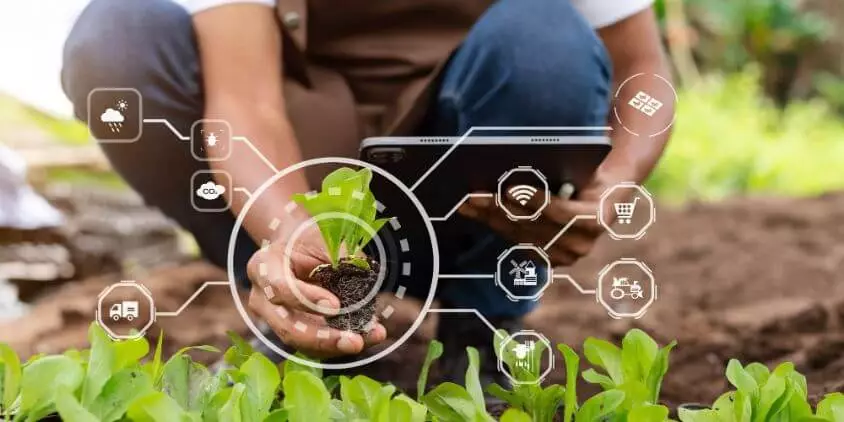
6. Precision Agriculture and Digital Farming Tools
Technology is becoming essential for modern farming. Precision agriculture uses data and digital tools to make smarter decisions.
Examples:
-
Satellite imagery
-
Weather apps
-
Drone monitoring
-
Mobile advisory apps
-
GPS-guided equipment
These innovations help farmers save money, reduce waste, and increase yield accuracy.
7. Rainwater Harvesting and On-Farm Water Storage
Harvesting rainwater provides a reliable water source during drought or dry seasons.
Popular systems:
-
Farm ponds
-
Water tanks
-
Contour ridges
-
Runoff collection channels
Proper water storage ensures irrigation and livestock have enough water even in harsh conditions.
8. Climate-Smart Livestock Management
Animals also feel the effects of climate stress. Heat can reduce their productivity and health.
Climate-smart solutions:
-
Shade structures
-
Improved ventilation
-
High-quality feed
-
Access to clean water
-
Resilient livestock breeds
These practices improve animal welfare and reduce losses.
9. Crop Diversification and Mixed Farming Systems
Dependence on a single crop increases risk. Diversification spreads that risk and strengthens resilience.
Options:
-
Growing multiple crop types
-
Integrating livestock with crops
-
Planting legumes to improve soil fertility
Diverse farms withstand climate shocks better than monoculture systems.
10. Integrated Pest and Disease Management (IPM)
Permalink: /integrated-pest-management-ipm-2025
Warmer climates encourage new pests and diseases. IPM uses many safe, effective approaches to control them while protecting the environment.
IPM methods include:
-
Crop monitoring
-
Biological control (natural predators)
-
Resistant varieties
-
Safe, targeted pesticide use
IPM reduces losses and keeps ecosystems healthy.
Conclusion
2025 marks a turning point for global agriculture. Farmers who adopt climate-smart practices will experience:
-
Higher productivity
-
Lower production costs
-
Greater resilience to climate shocks
-
Improved soil and water health
By combining technology, sustainable practices, and smarter resource management, farmers can secure a more sustainable future for themselves and the planet.
About the Author